The Complete Vastu Guide to Every Room You Will Build.
A bedroom direction that gives deep sleep. A kitchen position that protects health. A pooja room that receives the purest morning light. This is how North Indian homes have always been built to last and to heal.
Where You Sleep Is Where Your Body Repairs Itself.
Governing Deity: Nirrti · Element: Prithvi (Earth)
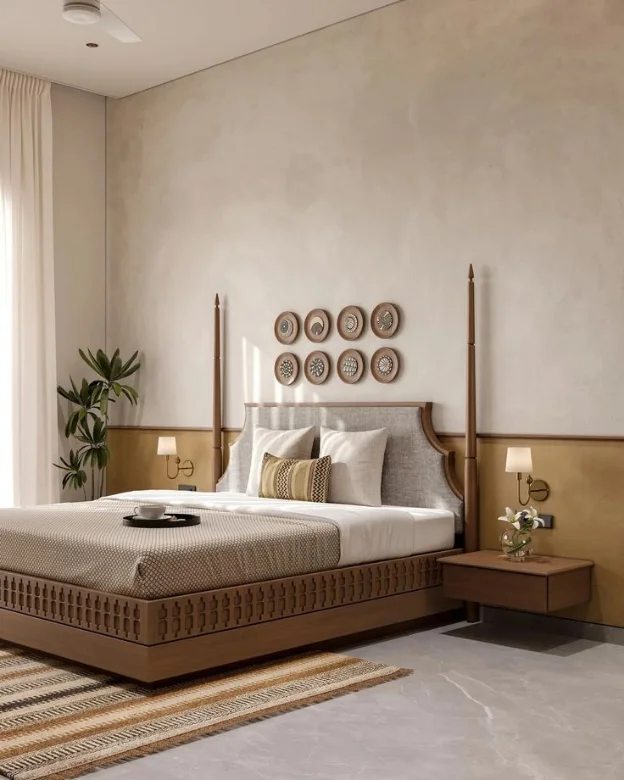
You spend one third of your life in your bedroom. The direction your head points, the walls around you, the light that enters — all of it shapes how rested and healthy your family wakes up.
The Nairitya zone is the most stable, densest zone — least direct sunlight, coolest, maximum structural mass. Ideal for rest and recovery.
Head South for couples aligns the body with Earth's geomagnetic field for optimal melatonin and REM. Head North disrupts sleep architecture.
Ambient light reflected from mirrors even at low lux suppresses melatonin production. Cover mirrors at night or avoid facing the bed.
Ensures the first air and light entering the waking occupant's space comes from the most beneficial directions.
The Kitchen Is Where Agni — the Sacred Fire — Must Be Correctly Placed.
Governing Deity: Agni · Element: Fire
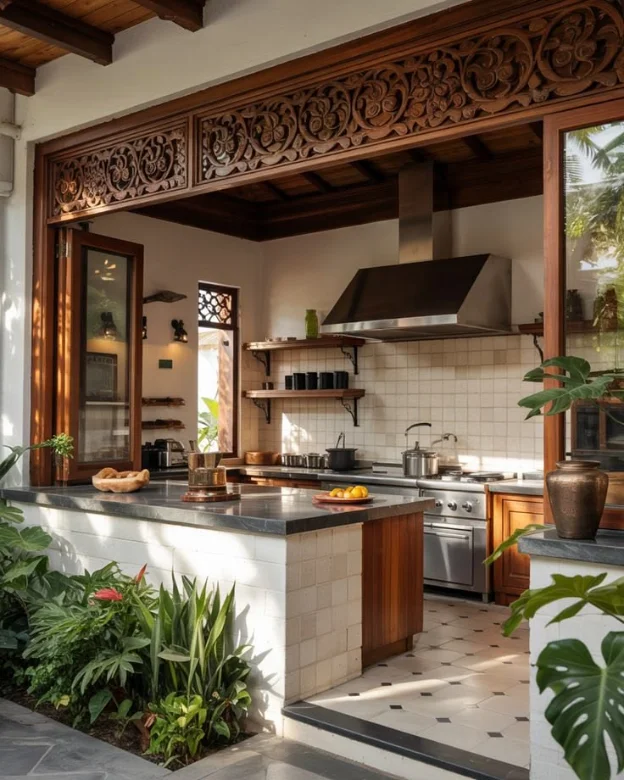
A wrongly placed kitchen means smoke travels into bedrooms and the cook works against natural light. Correct South-East placement changes the food itself.
Receives morning UV sterilisation from East, warmth from South, and prevailing winds carry smoke away via North-West.
The cook faces East while cooking — aligning food preparation with Surya's health and vitality energy.
Sink and water storage on the North-East wall — never adjacent to or opposite the cooking fire, to prevent elemental conflict.
A window or chimney above the cooking area opening East or South ensures smoke evacuation and indoor air quality.
The Pooja Room Energises the Entire Home.
Governing Deity: Ishanya · Element: Jala (Water)
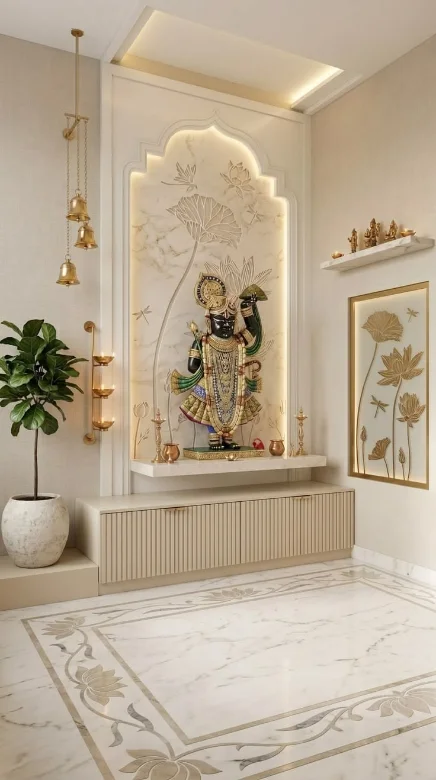
The North-East receives the first UV-rich morning sunlight — the strongest serotonin trigger — placed here it receives the purest morning energy of the entire house.
The Jala zone associated with purity, clarity and wisdom, receiving the earliest and purest daily light.
Idols face West or South so the devotee faces East (Surya/vitality) or North (Kubera/prosperity).
Never place a Pooja space below ground or in a basement — the energy flow prescribed is upward.
The energy requirements of rest and worship are in direct conflict — an alcove is preferable to bedroom sharing.
The Social Heart of the Home Must Flow with Kubera's Abundance.
Governing Deity: Kubera · Element: Balance
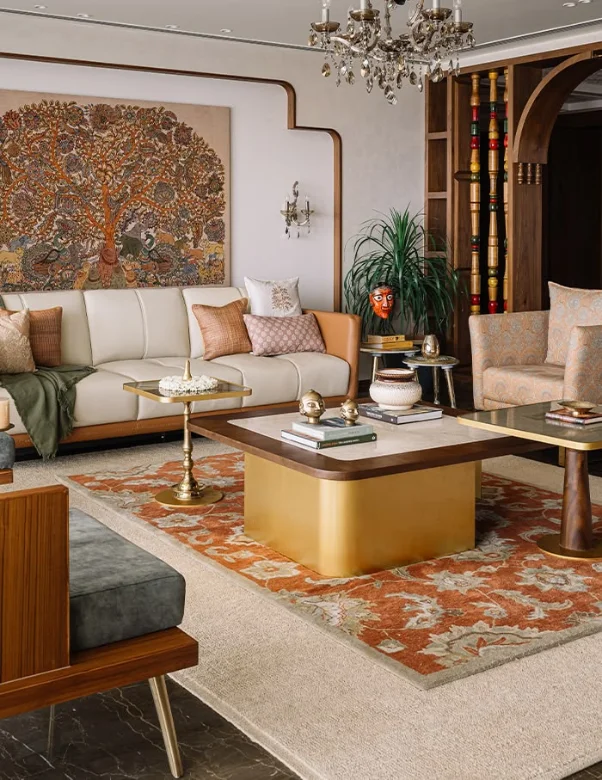
A living room in the North zone creates an energetic reception hall for prosperity to enter the home, and should feel welcoming, bright and open.
Living rooms should be positioned lower in height than bedrooms and kitchens — creating natural sightlines and a feeling of welcome.
Sofas and cabinets belong on the heavier South/West sides, keeping North/East lighter and more open.
Seated for meals or conversation, the family leader aligns with beneficial energetic directions.
South windows, if unavoidable, need deep chajja overhangs to prevent harsh afternoon heat.
Morning Light Sharpens Focus — The Study Must Face the Rising Sun.
Governing Deity: Surya / Indra · Element: Agni (Fire)
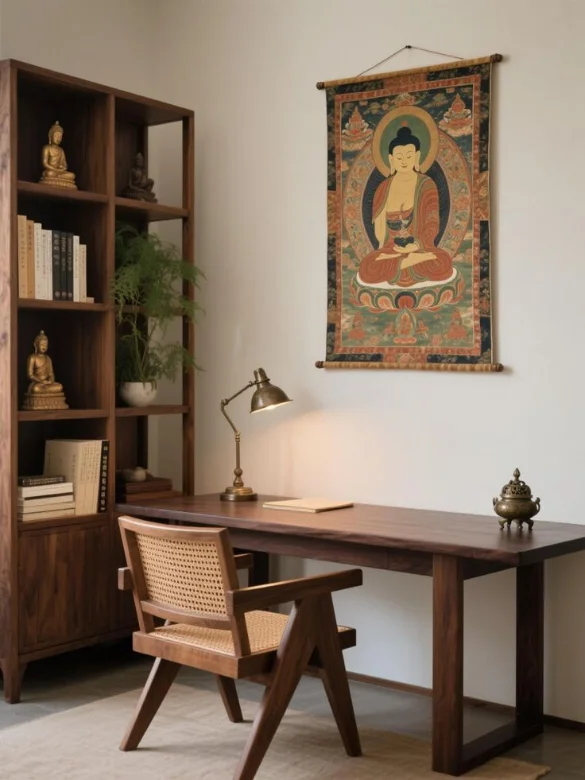
East placement receives UV-B light that triggers serotonin and norepinephrine synthesis — the neurotransmitters of focus and attention.
The East zone is governed by Indra, ruler of the senses — sharpness, clarity and perception.
Morning light at 500–600 lux maximizes alertness and cognitive performance.
Keep the window clear during 6 AM–10 AM to allow direct morning light onto the study space.
South-West is the family head's domain; North-West is too scattered; under-stair space has documented cognitive disruption.
The Open Centre Is the Lungs of the Home.
Governing Deity: Brahma · Element: Akasha (Space)
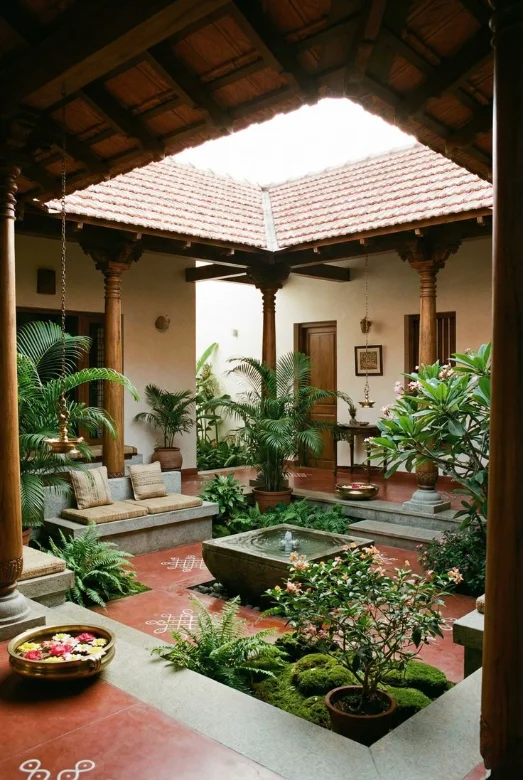
The most important single design decision in a traditional Indian home — free of construction, open to the sky, serving as the thermal engine, light well and sacred centre.
No column, beam, or permanent structure — the thermal stack effect requires unobstructed vertical airflow, reducing indoor temperature 4–7°C.
Tulsi releases oxygen most of the day and has antimicrobial properties reducing airborne pathogens.
Sandstone or granite has higher thermal mass and natural drainage properties versus concrete or tiles.
The sacred centre must be adjacent only to pure-function spaces.
Waste Water Must Flow Away from Sacred Zones.
Governing Deity: Vayu · Element: Air
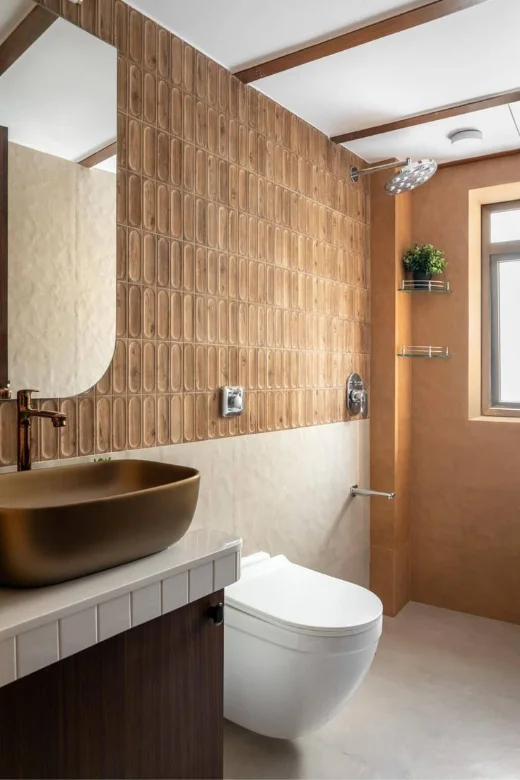
North-West bathrooms naturally drain toward the South-West, moving waste away from the wellness and sacred zones of the home.
The Vayu principle of movement ensures wastewater flows away from the NE corner and SW master bedroom.
If combined, position the toilet on the South or West portion of the room.
UV light sterilises surfaces naturally, reducing mould and bacterial growth.
Brings the Fire element into its correct directional zone even within the NW room.
The Entrance Determines What Energy the Home Receives Each Day.
Governing Deity: Kubera / Surya · Element: Multiple
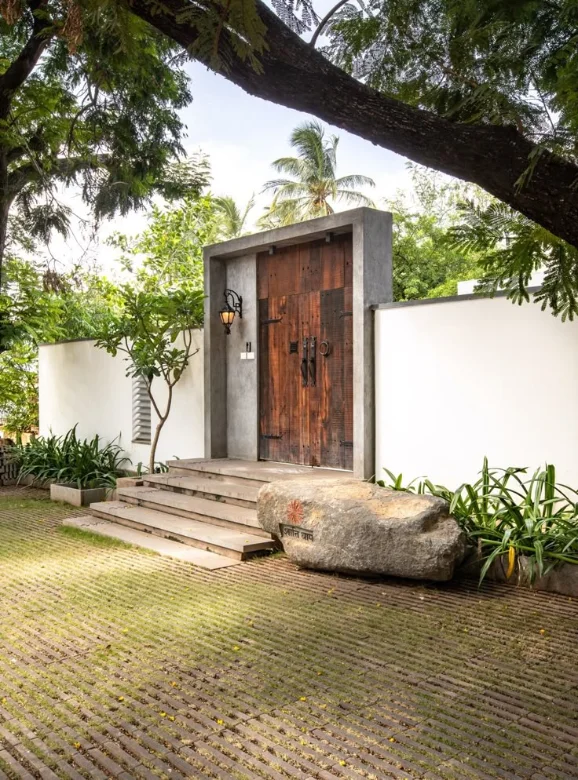
North receives Kubera's prosperity energy; East receives Surya's health and vitality — the two most beneficial entry directions.
South entrance is prescribed only for specific Yoni types with protective design offsets.
1, 3, 5, 7, 9 or 11 steps maintain energetic continuity upon entry.
No wall, pillar, or tree should directly face the entrance within 9 feet.
The right side is associated with active energy — amplifying the welcome energy of the entrance.
The Staircase Carries Energy Between Floors.
Governing Deity: Yama / Varuna · Element: Prithvi
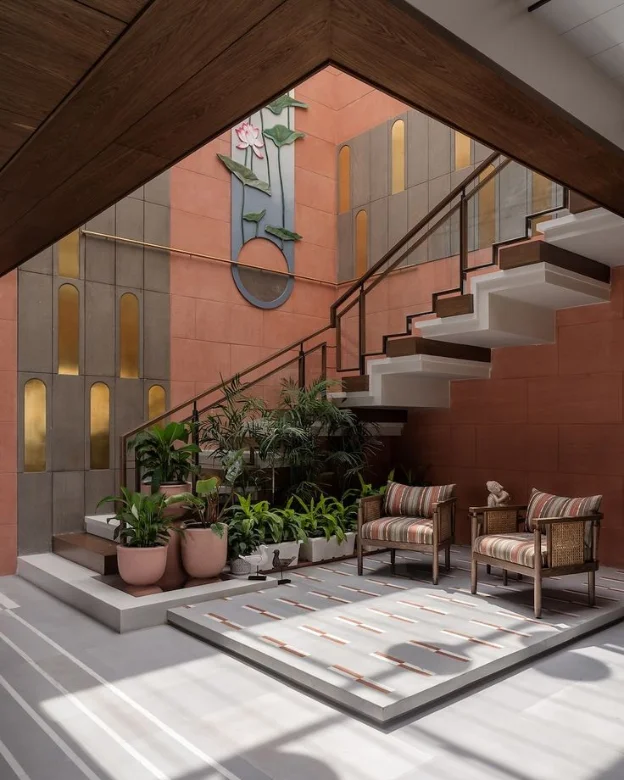
Placed in South, West or South-West — the heavier, denser sides of the home — a staircase never cuts into light-receiving zones.
Never in the North-East (sacred zone) or centre (Brahmasthana).
Aligns with the solar movement of the sun and the auspicious circumambulation direction.
5, 7, 9, 11 or 13 steps — so ascent always ends on the same foot it began with.
The downward pressure energy beneath stairs is appropriate only for utility storage.
Stored Resources and Utilities in the Stable, Grounded South.
Governing Deity: Yama · Element: Prithvi (Earth)
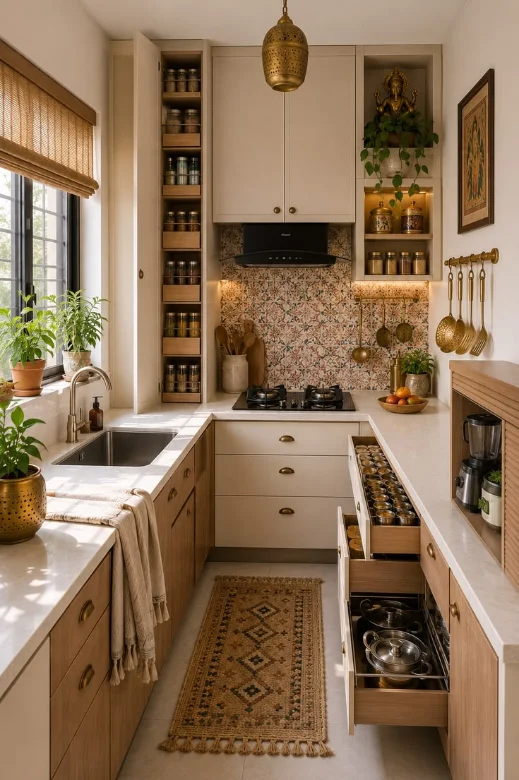
The South's heavy, dense earth energy is appropriate for storage — goods placed here are secure and do not shift.
The stable, grounded domain of Yama houses secondary storage, utilities and supplies.
North-West storage is acceptable only if fully separate from the bathroom.
Precious items — cash, jewellery, documents — belong in the North, the domain of Kubera.
Storage of any kind in the Brahmasthana creates energetic stagnation in the home's core.